
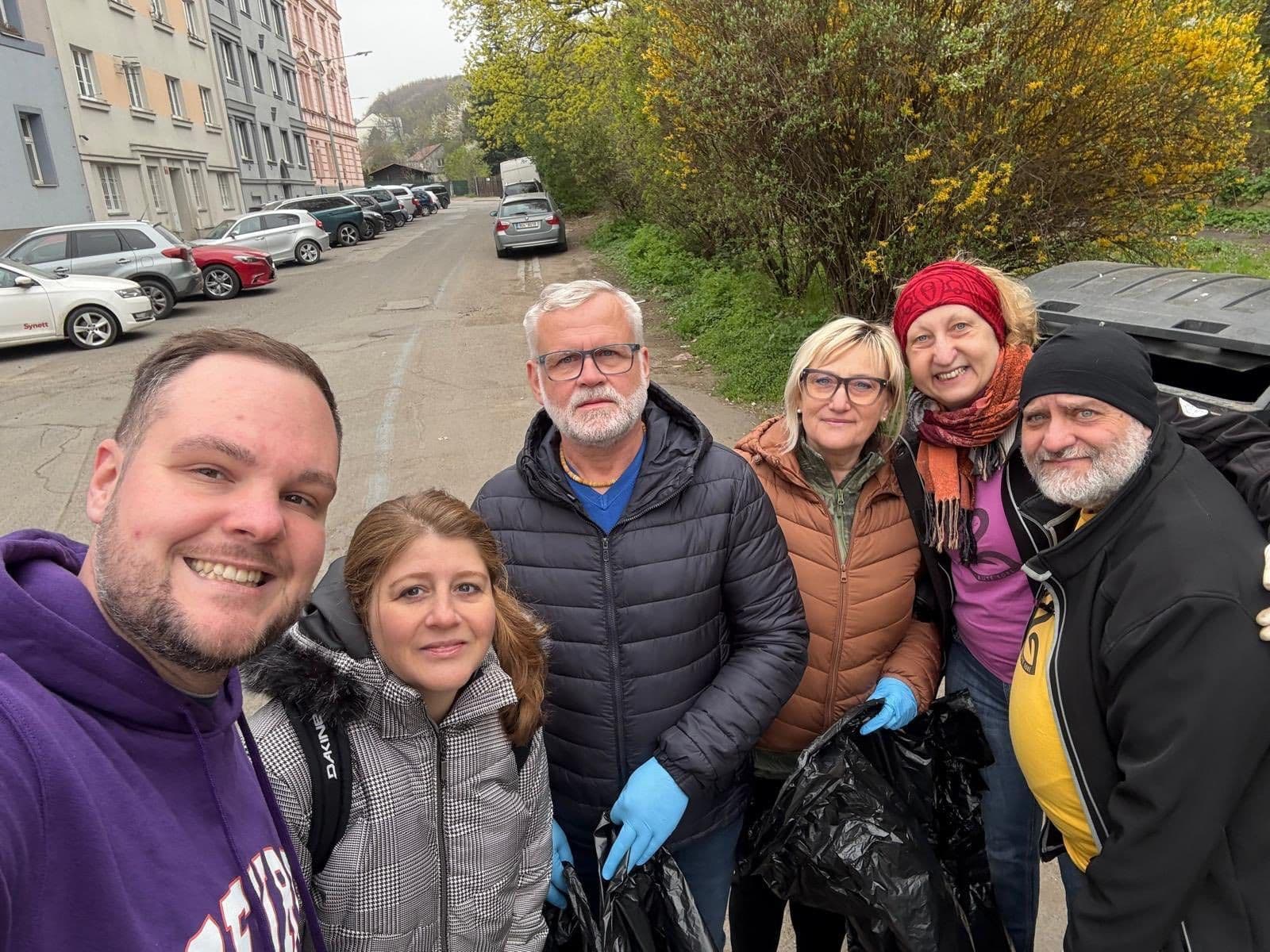
There are plenty of places in Libeň with more potential than their current appearance suggests. We cleaned up one of them together at the weekend.
It was a neglected space next to residential buildings that had long felt more like a dumping ground than a place for people. Yet it is clear that it could serve a completely different purpose. According to local people there used to be a sandpit, a slide and a bench here. An ordinary little patch where children could stop for a while and neighbours could meet.
And places like that are exactly what makes sense in a city.
In two hours it was clear how much can change
In the course of two hours we collected rubbish together, raked up old leaves and uncovered the remains of the paving. The space brightened up immediately.
It was not a big investment project. No ceremonial opening, no press release, no ribbon cutting. Just a few people, rakes, rubbish bags and the will to do something concrete for a place people walk past every day.
That is the strength of neighbourhood events. They show that changing public space does not always have to start with a big project. Sometimes it starts with someone noticing the mess and not letting it be.
A place that is asking for a second chance
After the clean-up it is even clearer that this corner of Libeň has potential.
It could become a small neighbourhood space to sit in, a simple place for children or a quiet green spot between the buildings. Not everything has to be a big park. Even smaller places have great value in a densely populated neighbourhood, as long as they are clean, safe and maintained.
It is important that spaces like this do not stay without care for long. As soon as a place starts to look abandoned, it quickly attracts more mess. And the other way round: when someone starts looking after it, the way people see it changes too.
Thank you to everyone who helped
Big thanks go to all the neighbours who came and helped with the clean-up. And also to the environment department of Prague 8, which promised to remove the collected waste.
This is practical cooperation that makes sense. Active local people point out a problem and lend a hand. The district helps where it has the tools and the responsibility.
That is exactly how care for public space should work.
What next?
Now it is worth asking what this place could become next.
It would not take much: basic maintenance, a safe and clean surface, a bench, perhaps a simple piece of play equipment or planting to make the place cosier. Not an expensive attraction, but an ordinary liveable corner of the city.
We will be glad if local people join the discussion too. They know best what would make sense in a place like this.
Conclusion
The Libeň clean-up showed one simple thing: even a neglected space can brighten up quickly when people who care about their surroundings turn up. Now it is important that the work does not stop there. Prague 8 needs fewer forgotten corners and more places where you can normally live, meet and be outside.